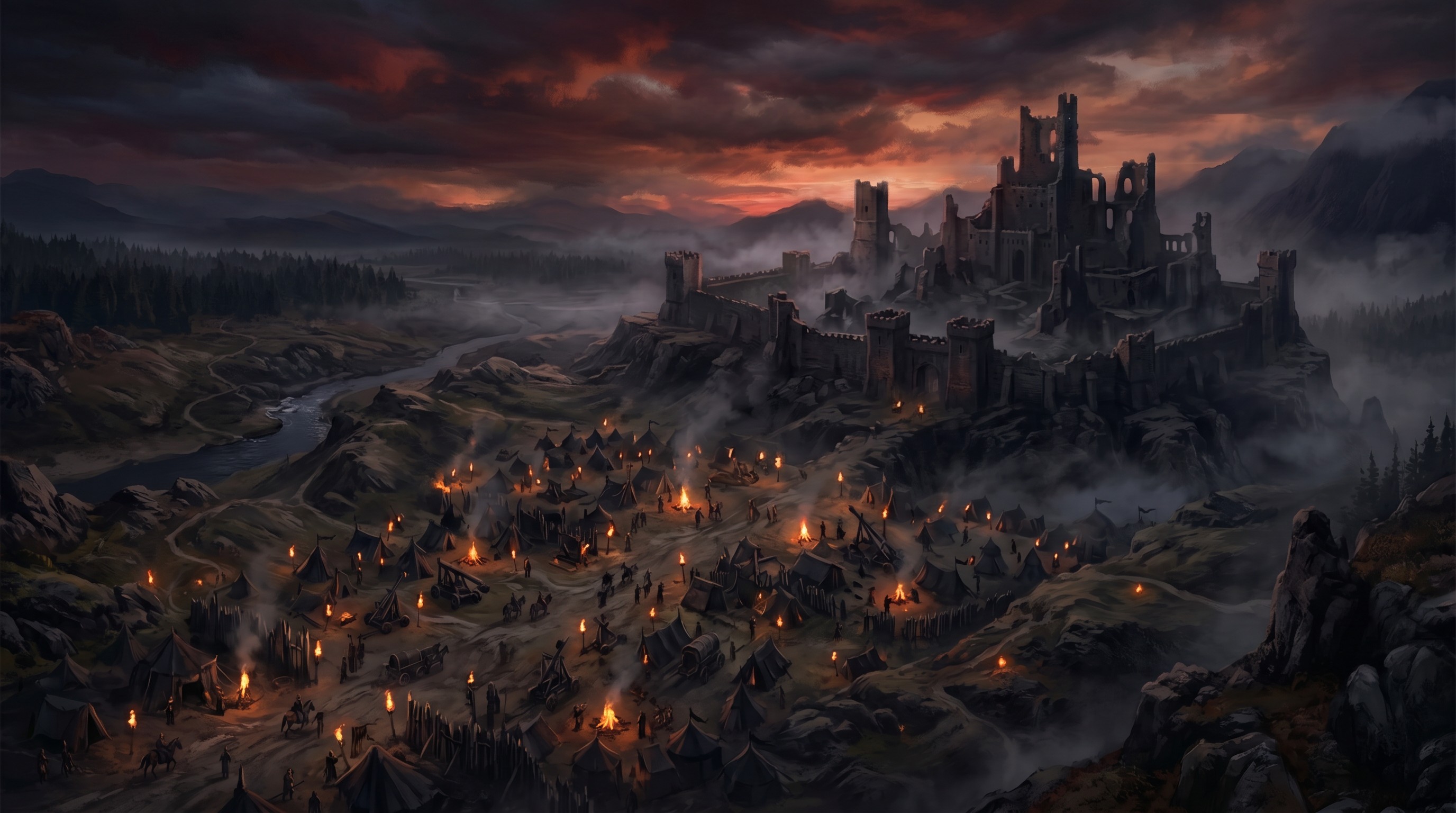

When Owlcat Games shipped Pathfinder: Kingmaker in 2018, the isometric CRPG was supposed to be a relic. BioWare had long since left the Infinity Engine behind, and the genre's revival mostly belonged to Obsidian and Larian. Owlcat, a young studio with Cyprus and Russia in its history, made a different bet: adapt an entire tabletop system, Paizo's Pathfinder, with almost stubborn fidelity, and trust that a serious audience still wanted hundreds of hours of rules, reactivity, and consequence.
That bet paid off across three games. The studio's signature is scale: enormous parties, branching campaigns, and adaptations that treat their source books as scripture rather than suggestion. If you grew up on Baldur's Gate and Icewind Dale, Owlcat is the studio that kept building in that tradition when almost no one else would.
Start here
The three games that define modern Owlcat.
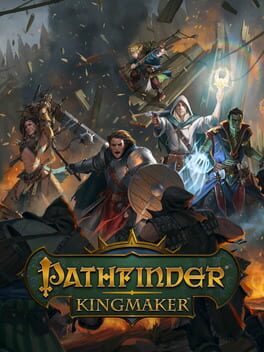
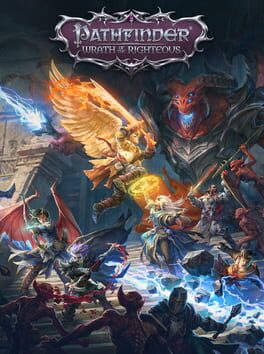
The Pathfinder pair is where Owlcat found its voice. Kingmaker married a classic dungeon-crawling campaign to a kingdom-management layer, letting you rule the Stolen Lands while adventuring across them. Wrath of the Righteous raised the stakes to the cosmic, dropping your party into a war against a demonic incursion and handing you Mythic Paths, escalating power fantasies that let a character become a Lich, an Angel, or something stranger. Both trace their bloodline straight back to the Infinity Engine, where a paused, tactical party of misfits argued its way through a continent's worth of quests.
The Pathfinder saga
Two adaptations of Paizo's tabletop RPG, from frontier kingdom to demonic crusade.
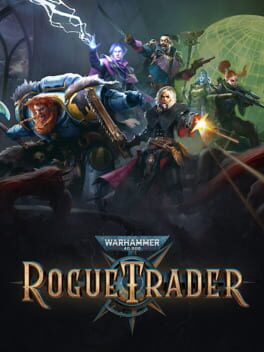
Warhammer 40,000: Rogue Trader (2023) took everything Owlcat learned from the Pathfinder games and pointed it at Games Workshop's most sprawling setting. As a Rogue Trader, you hold a Warrant of Trade that lets you explore, conquer, and profit at the edge of the Imperium. The same DNA is there: a large companion roster, conviction systems that track your alignment toward Dogmatic, Heretical, or Iconoclast paths, and combat that rewards knowing the rules cold. It is the studio proving its method travels beyond high fantasy.
Owlcat treats a rulebook the way other studios treat a screenplay: as the source everything else must honor.
Owlcat in three campaigns
- 2018Pathfinder: Kingmaker launches, adapting Paizo's tabletop adventure path and pairing dungeon-crawling with kingdom management.
- 2021Pathfinder: Wrath of the Righteous arrives with Mythic Paths, letting characters ascend to demigod status during a war against a demonic incursion.
- 2023Warhammer 40,000: Rogue Trader moves the studio into Games Workshop's grimdark future, its first CRPG set in the 41st millennium.
More modern studios
Every studio in the series. More on the way.
Frequently asked
Which Owlcat game should I play first?
For fantasy fans, Pathfinder: Kingmaker (2018) is the natural entry point and the studio's debut. If you want Owlcat at its most polished and ambitious, Pathfinder: Wrath of the Righteous (2021) is widely considered its high point. Prefer science fiction? Warhammer 40,000: Rogue Trader (2023) stands on its own with no prior knowledge needed.
What tabletop systems do Owlcat's games adapt?
The two Pathfinder titles adapt Paizo's Pathfinder roleplaying game, a system that grew out of Dungeons and Dragons. Rogue Trader adapts Games Workshop's Warhammer 40,000 tabletop setting, drawing on the older Rogue Trader pen-and-paper RPG. Owlcat is known for translating these rules with unusual faithfulness.
Are Owlcat games similar to Baldur's Gate?
Yes. Owlcat's games sit squarely in the Infinity Engine lineage established by Baldur's Gate and Icewind Dale: party-based, isometric, rules-heavy, and built around tactical combat you can pause. They are among the most direct modern descendants of that classic CRPG tradition.
Are Owlcat's games as complex as people say?
They are dense by design. Character building involves deep stat and feat systems drawn straight from the tabletop, and the campaigns run well over a hundred hours. That complexity is the appeal for many players, but newcomers may want to lean on the games' story-difficulty settings while learning the rules.